
“Our BI-48 made hollow cubes before a dinner service near Oxbow. The technician checked the filter date, fill-tube frost, water pressure and freezer temperature before replacing the inlet valve. The $520 repair took 2 hours, and the next harvest filled normally with solid cubes.”
4.9/5 network rating372 verified repairs
Ice Maker & Water Line · Napa, CA
Sub-Zero Ice Maker & Water-Line Problems in Napa
How do you fix a slow or hollow-cube Sub-Zero ice maker in Napa?
Napa Sub-Zero Repair traces the whole water path before ordering parts — a clogged filter, a failing inlet valve, fill-tube ice, or an icebox that has drifted a few degrees warm each leave a different fill pattern. For Coombsville homes near 94558 with long under-cabinet runs, dial (628) 209-6820 to confirm the cause first.
If your Sub-Zero in Napa is producing ice that is slow, jammed or hollow — or has stopped making ice entirely — the cause is almost always somewhere in the water path: a clogged filter, a failing inlet valve, a frozen fill tube, or an icebox that has drifted a few degrees too warm. In downtown Napa and the Oxbow Public Market area, older supply lines and hard water push filter clogs to the top of the list. Before a large dinner or a weekend hosting deadline, that is exactly the wrong moment for the ice to stop. Use Book Online with your Sub-Zero model number, and ask about parts availability before the visit so the right component rides along on the first call.
On this page
Model matters here
Sub-Zero ice-maker modules and inlet valves are series-specific. A BI-36U uses a different fill-tube assembly than a PRO 48 or a 700TCI. On-site model and serial verification before the visit — found on the upper-left interior wall or behind the lower grille — lets us confirm OEM part availability so there is no second trip.
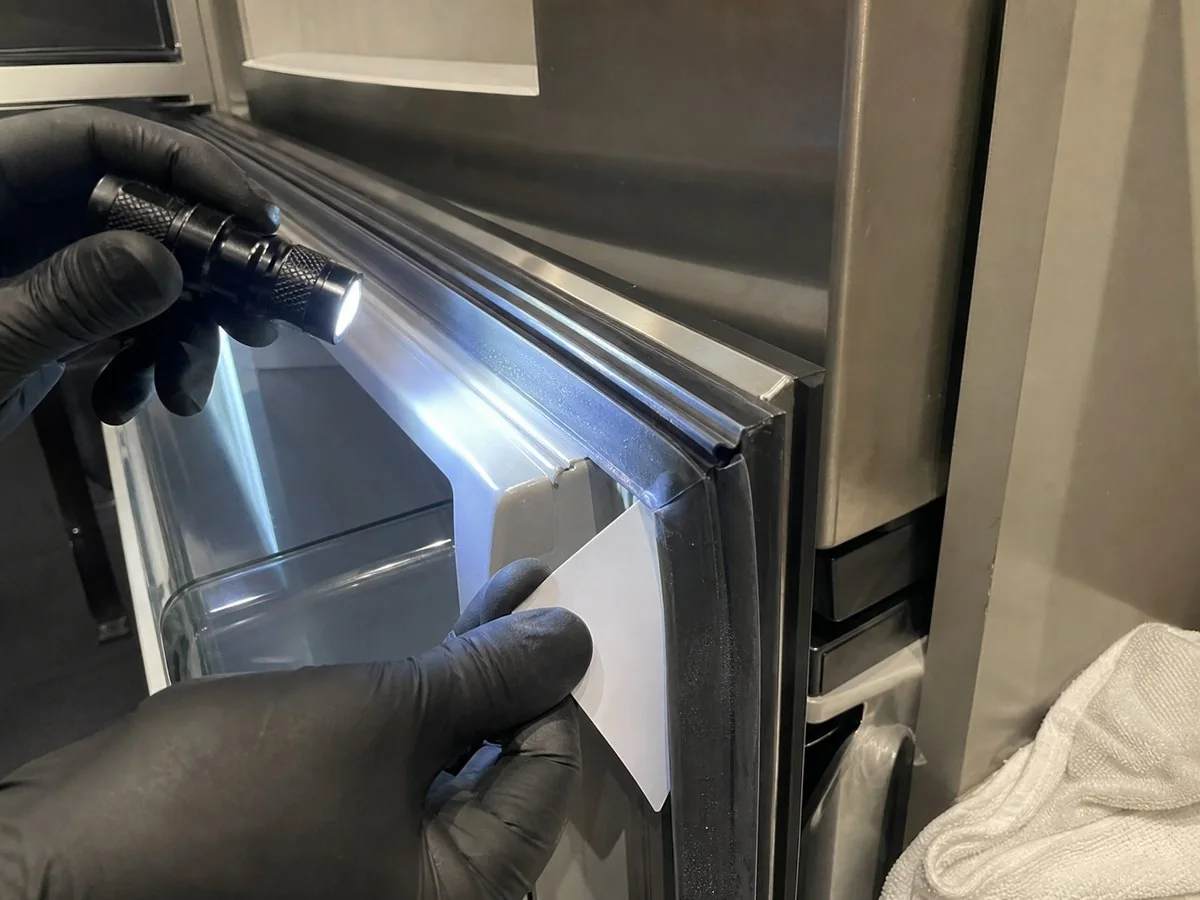
Adjacent symptom
When the wine column is drifting several degrees — and what it has to do with ice
A Sub-Zero wine column drifting several degrees from its set point is not just a thermostat preference issue — it usually means the refrigeration circuit serving that zone is working harder than it should. In plain language: a thermistor reading the wrong temperature tells the control board to hold a set point it is not actually achieving, so the display may show the target zone temperature while the actual wine environment is warmer or cooler by four to eight degrees.
This matters on the ice-maker page because the two faults share a diagnostic step: we read actual temperature readings at both the icebox and the wine zone with a calibrated probe, not by trusting the front display. A control board, thermistor or display alarm that is mis-reporting the wine zone is frequently the same kind of sensor or board fault that lets the icebox drift warm — which is itself one of the top causes of slow ice and hollow cubes.
Diagnosis confirms it: on site we capture temperature readings, inspect condenser and evaporator photos for load evidence, verify the model-tag proof for the right OEM part, and pull fault codes if a display alarm is active. The one limitation to know upfront: if two zones are both drifting and the readings point toward a sealed-system refrigerant issue rather than a sensor or board, the repair scope changes significantly and is quoted separately after the compressor readings are complete.
What diagnosis confirms
- Actual zone temperature vs. set point (probe, not display)
- Thermistor resistance reading — out-of-spec = replace
- Control board fault codes pulled via service mode
- Condenser load evidence (photos, head pressure reading)
- Fan operation in wine zone and icebox
- Model-tag serial range to match OEM thermistor or board
One limitation
If both ice production and wine-zone temperature are degraded simultaneously and readings suggest refrigerant loss, we quote the sealed-system scope separately — it is EPA-regulated work that cannot be confirmed until compressor pressures are measured.
Ranked causes — simple to expensive
Six reasons a Sub-Zero ice maker fails, in order of likelihood
Each cause produces a recognizable symptom pattern. The table moves from the most common and least expensive to the least common and most involved — so you know where the diagnosis starts before a technician arrives.
| # | Cause | Signs you will notice | How it is tested | Typical repair |
|---|---|---|---|---|
| 1 | Water filter clog | Ice maker slow or cubes are half-size; water dispenser flow weak; filter change indicator lit. Common in Napa's hard-water areas when filters go past 12 months. | Flow rate test at the dispenser; visual inspection of cartridge; bypass test to confirm whether flow restores with filter removed. | OEM filter replacement. Least expensive fix; diagnostic credit typically covers most of the cost. |
| 2 | Low water pressure / inlet valve | Ice maker slow, cubes are hollow or thin at the top; fill cycle audible but brief; sometimes a trickle at the dispenser even with a fresh filter. | Water pressure measurement at the supply line (Sub-Zero spec is 20–120 psi); solenoid continuity and resistance check on the inlet valve; valve opening confirmed with voltage test. | Inlet-valve replacement with OEM solenoid assembly matched to model series. Mid-range repair in the common-repair band. |
| 3 | Frozen fill tube | Ice maker jammed or stopped entirely; audible fill attempt with no water reaching the mold; solid ice visible in the fill-tube area above the mold. | Visual inspection of fill tube; icebox temperature reading (a tube freezes when the icebox runs colder than spec or the defrost cycle is incomplete); thermostat and defrost circuit check. | Thaw the tube (correctly — no tools); address root cause: defrost circuit repair or ice-maker thermostat if the icebox is over-cooling. Part cost varies by root cause. |
| 4 | Icebox too warm | Hollow cubes or ice with white cloudiness; ice clumps together in the bucket; production volume down. Icebox reading above 5°F will degrade cube quality noticeably. | Calibrated probe temperature reading inside the icebox; door-seal inspection; evaporator fan operation check; condenser load assessment. | Depends on root cause: door gasket, evaporator fan, or condenser service. Priced within the common-repair band; sealed-system causes quoted separately. |
| 5 | Ice-maker module / optics board | Ice maker completely stopped with no harvest cycle; harvest arm stuck in up position (older models); optical sensor not detecting an empty bin (newer units); error code or display alarm active. | Service-mode harvest test; optics sensor continuity; module voltage test; pull and review any active display alarm or control board fault code. | Ice-maker module or optics board replacement — OEM part matched to model and serial. Upper end of the common-repair band, occasionally into the lower sealed-system range on full-module replacements. |
| 6 | Water supply line | No water at all — dispenser and ice maker both dead; visible kink, leak or stain behind unit; older braided line that has never been replaced. | Visual inspection of entire line from valve to wall supply; pressure test; check saddle tap or shut-off valve at the wall. | Water-line replacement. In older downtown Napa homes and properties near the Oxbow Public Market area, original supply runs can be long and routed through cabinetry — labor time reflects access difficulty. |
Sub-Zero specifically
Sub-Zero ice makers are integrated into the refrigerator or freezer column's sealed system — the icebox temperature is governed by the same evaporator and control board that runs the freezer. A fault in the freezer-side defrost circuit or a condenser running hot in summer can cascade into fill-tube freezes and hollow cubes that look like water-line problems. That is why we read actual temperature readings and condenser/evaporator evidence before ordering a part.
Why Napa is different
Large meals, hot summers and old supply lines: local factors that accelerate ice-maker faults
An ice-maker failure in a Napa kitchen is rarely just bad timing — the local environment, home age and entertaining patterns shape how quickly a sub-threshold problem becomes a real outage.
Downtown & Oxbow area
Homes near the Oxbow Public Market sit on older supply infrastructure. Mineral-heavy water and long under-cabinet supply runs mean filters clog faster and saddle taps on original copper can restrict flow. We inspect the full line, not just the filter cartridge.
Hosting & harvest season
Large dinner parties and harvest-season hosting push ice demand well past the machine's baseline cycle. A borderline slow inlet valve that keeps up on quiet weeks cannot meet a 200-cube-a-day event load — the failure shows up right before service.
Hot-summer condenser load
Napa summers can push ambient temperatures near the built-in condenser above 85°F — especially in kitchens with south or west exposure. A condenser coil that has not been cleaned in two years at that load runs the icebox warmer than spec, producing the hollow-cube pattern without a single failed part.
Wine-country estates
Up-valley and estate properties often run ice makers and wine columns side by side, sharing condenser air in tight cabinet bays. Ice-maker faults at these properties frequently coincide with wine-column temperature drift — a signal to check the condenser path for both zones together.
Also serving Browns Valley, Alta Heights, Silverado, Coombsville, Yountville, St. Helena and American Canyon (94558, 94559). For second-home and estate properties that sit between visits, we confirm the unit is producing correctly before closing the service request.
How we confirm the fault
What the technician documents before quoting an ice-maker repair
A real ice-maker diagnosis is a chain of readings, not a guess from the symptom description. On every Sub-Zero visit in Napa we document the following before recommending any part:
- Temperature readings — icebox actual temperature with a calibrated probe, not the front display. A two-degree drift here changes the diagnosis.
- Condenser and evaporator photos — visible evidence of dust load, frost pattern or airflow restriction that can explain hollow cubes without a failed module.
- Model-tag proof — the serial range on your specific unit determines which OEM fill-tube assembly, inlet valve or ice-maker module is correct. Generic substitutes can affect sealed-system performance on built-in Sub-Zero units.
- OEM fan, gasket and control-board evidence — if the harvest problem traces to a control board, thermistor or display alarm, we confirm with meter readings before ordering. A board that reads fine electrically but is logging a temperature fault gets a different repair path than one with a dead output.
Only after that sequence do we quote. You receive a written flat price, and the diagnostic fee of $150–$225 applies toward any repair you approve.
Napa pricing ranges for ice-maker and water-line work
General ranges to set expectations. Every job is confirmed in a written flat quote before work begins; the diagnostic fee applies toward any repair you approve.
Diagnostic visit
$150–$225
Temperature readings, inlet-valve test, filter flow check, condenser inspection and written estimate. Credited toward the repair.
Common repairs
$340–$950
Filter, inlet valve, fill-tube service, ice-maker module, optics board or icebox evaporator fan. OEM parts matched to your model and serial.
Water-line & access
Quoted on site
Older downtown Napa homes and estate properties with long cabinet runs add labor time. Confirmed after the access is assessed, not guessed from the phone.
Ice & water questions
Six things Napa homeowners ask about Sub-Zero ice makers
Why is my Sub-Zero ice maker slow or producing hollow cubes?
Hollow cubes on a Sub-Zero almost always mean the mold is not filling completely — the top cause is a clogged water filter starving flow, followed by a weak or failing inlet valve that cannot hold the correct fill pressure. A frozen fill tube is also common, especially in older units or those with icebox temperature drift. Each cause shows a different fill pattern in the mold, which a technician can read on site before ordering any part. In Napa's harder-water areas, a filter past its annual replacement date is the first test.
My Sub-Zero ice maker is jammed — should I chip the ice out?
Do not chip ice out of a Sub-Zero mold with any tool. The fill tube and mold assembly are plastic on most series, and cracking either one turns a simple thaw job into a parts replacement that costs far more. Power the unit off and let the jam thaw naturally — or call us so we can confirm whether the jam is a one-off or a sign of a recurring frozen fill tube or a warm icebox that needs the real fix. Before any event or hosting deadline, that call is worth making early.
Can a clogged water filter really stop ice production completely?
Yes. On Sub-Zero models with a built-in filter cartridge, a filter past its service life can restrict flow enough that the inlet valve cannot pull adequate water into the fill cycle — production drops to a trickle or stops entirely. The filter is usually the first test and the least expensive fix. Sub-Zero recommends replacement every six to twelve months; in Napa's mineral-heavy water, annual changes are a minimum. If bypassing the filter restores flow, you have your answer before the technician orders anything else.
How much does Sub-Zero ice maker repair cost in Napa?
A filter swap and inlet-valve replacement are common repairs in the $340–$600 range, including the diagnostic. An ice-maker module or optics board lands toward the upper end of the common-repair band ($500–$800). Water-line replacement depends on access — older downtown Napa homes with long supply runs through cabinetry can add labor time. Every job starts with a $150–$225 diagnostic visit credited toward the repair you approve in a written flat quote. Ask about parts availability before the visit so the right OEM component is on the truck.
Can Napa mineral scale make hollow cubes return after a new filter?
Yes. A filter can restore flow temporarily while scale remains at the inlet valve, saddle tap or long under-cabinet supply line. If hollow cubes return within 2-4 weeks, the technician should test fill volume, valve response and freezer temperature together. Replacing the ice module alone will not solve restricted water flow.
What should I do before a harvest dinner if ice output is slow?
Do not chip the mold or lower the freezer to an extreme setting. Empty old clumped ice, install a fresh approved filter if due, note how many cubes are produced in 3 hours, and call early. For Napa hosting weeks, a weak valve that barely keeps up on normal days often fails under event demand.
Ice maker slow, jammed or hollow? Let's confirm the cause before ordering parts.
Call (628) 209-6820 or book online to schedule a diagnostic window. The technician verifies model, serial, temperatures and repair evidence at the appliance before the written quote.
Adjacent pages: Wine storage temperature drift · Not cooling diagnostic · Sub-Zero repair overview · Home
Overlapping symptoms: a water-line leak on the floor or a freezer not freezing can both show up alongside ice-maker trouble.
Local reviews
Ice-maker repair reviews tied to water flow, filters and Napa kitchens
4.9/5 network rating372 verified repairs
“The ice maker jammed twice in a week and we nearly chipped it out by hand. Service traced it to a frozen fill tube and an icebox running about 6°F warm. They thawed the tube safely, corrected the airflow path, and replaced the module heater. The $610 repair had the bin filling normally by morning.”
“Our 700-series unit had slow ice and a long under-cabinet water run in Coombsville. The tech found restricted flow at the old valve, replaced the inlet valve, and flushed the line. The $740 repair took 3 hours because the cabinet run had to be opened carefully.”
Service desk: 1300 First Street, Suite 368, Napa, CA 94559. Visits are scheduled by appointment; call before stopping by.