
Symptom guide · Napa, CA
Sub-Zero leaking water in Napa
Water on the floor, a puddle inside the freezer, a damp patch behind the cabinet, or beading on the door — these are four different problems, and only some of them are even a leak. This guide traces where the water comes from, separates condensation from a real fault, and helps you stop floor damage before it starts.
4.9/5 · 950 verified customer reviews
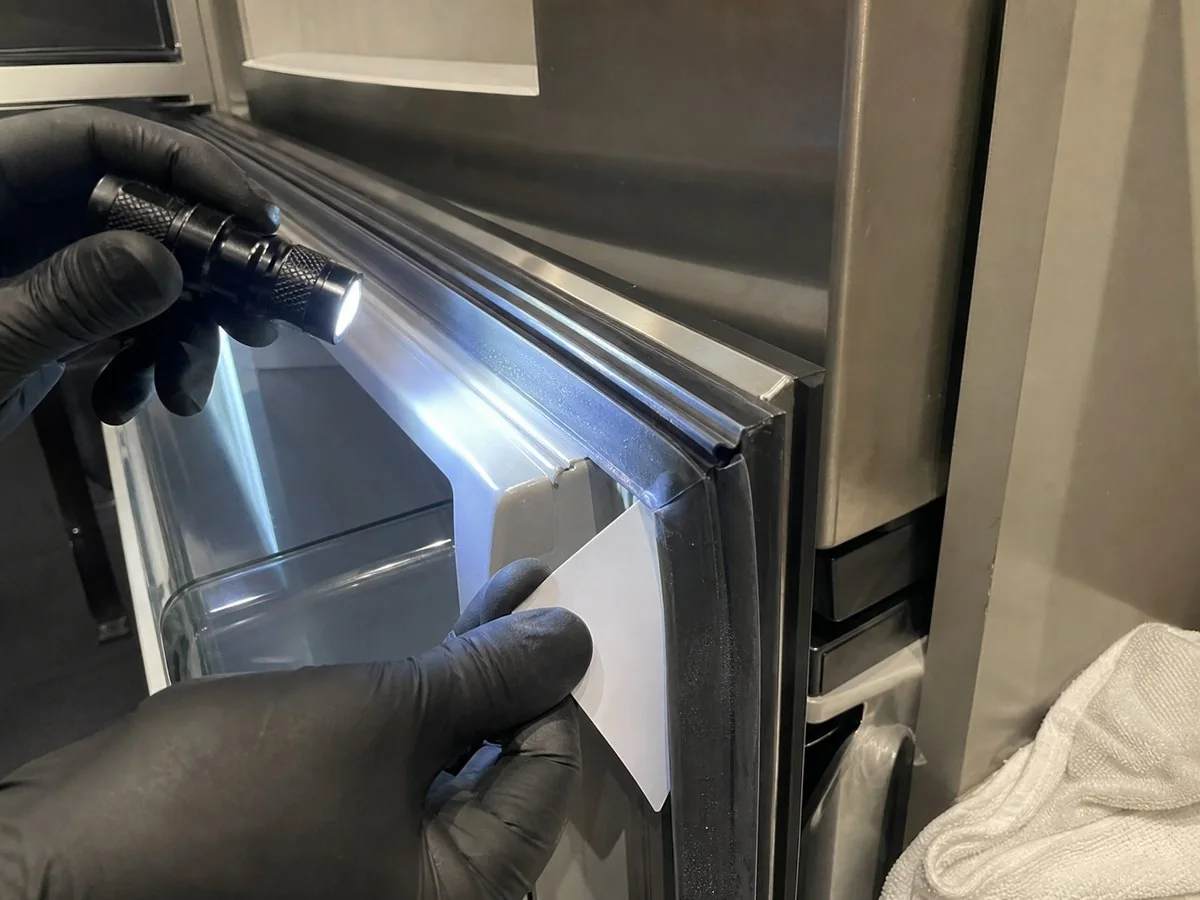
A Sub-Zero "leaking water" is one of the most misread symptoms we get, because four very different things all look the same from the kitchen floor. Water can back up from a blocked defrost drain, drip from a cracked pan, weep from the ice-maker line, or simply condense on a cold surface on a humid morning. Telling them apart is the entire diagnosis — and the gasket-sweat case isn't a leak at all. (For a door that sweats or frosts at the seal specifically, the gasket and seal page is the right read.)
The stakes are higher in Napa than people expect, and it has nothing to do with the appliance. So many homes here — the historic streets around downtown, the older properties out in Coombsville and Browns Valley — sit on hardwood or refinished floors that run right under the built-in. A slow drain overflow that nobody catches will cup a plank or leave a stain that costs far more to fix than the part ever would, and in a second home that sits empty between visits it can run for weeks. So the first job isn't diagnosis. It's getting a tray under the unit and stopping the water.
Trace the water
Where a Sub-Zero leak actually starts
Where the water collects tells you which part is involved. Match what you see to the source before deciding it's a leak at all.
| Where the water is | Likely cause | Typical fix |
|---|---|---|
| Pooling on the freezer floor, ice underneath | Clogged or frozen defrost drain backing up | Thaw and clear the drain; correct what refroze it |
| Dripping from the bottom front | Overflowing or cracked evaporator drain pan | Reseat or replace the drain pan |
| Wet patch behind or under the cabinet | Ice-maker fill valve or water-line leak | Repair the inlet valve, fitting or line |
| Beads or film on the door and gasket | Condensation, not a leak — see below | Gasket or door-alignment service if persistent |
Condensation vs a true leak
Before we call anything a leak, we rule out condensation — and in Napa that matters more than in a drier climate. Our fog-heavy mornings push indoor humidity up, and when warm, moist air meets the cold face of a built-in it beads on the door, the gasket, or the cabinet front. Open that door over and over through a harvest dinner and you'll see the same sweating. It looks alarming, but it's physics, not a fault, and it usually traces to a tired gasket or a door that no longer seals square rather than to any drain or line.
A real leak collects where water shouldn't be: a puddle inside the freezer, a steady drip from the bottom front, or a wet shadow behind the unit. The clearest tell is the defrost drain. Every freezer melts frost on a cycle and routes that water to a pan to evaporate; when the drain ices over or clogs, the water has nowhere to go but up and out, leaving ice on the freezer floor and a puddle out front. That's a bounded repair — thaw it, clear it, and fix what made it refreeze — but pouring hot water down it or chipping the ice tends to make it worse, not better.
Before you call
Five steps to stop the damage and find the cause
- Protect the floor first. Slide a towel and a shallow tray under the front edge before anything else. Downtown Napa and Coombsville homes often have hardwood or refinished floors under a built-in, and standing water there does more damage than the appliance fault itself.
- Find where the water actually starts. Is it pooling inside the freezer floor, dripping from the bottom front, wet behind the unit, or beading on the door? Each origin points at a different part, so trace the water to its source before you decide what's wrong.
- Check the ice maker and water line. Look at the fill cup, the line behind the unit, and the shut-off valve for drips or a slow weep. A water-line or inlet-valve leak is a steady wet patch behind or under the cabinet rather than a puddle inside.
- Note the weather and the door habits. Beading on the door or a damp gasket on a fog-humid Napa morning is often condensation, not a leak. Tell us whether it tracks with humid mornings or heavy door use — it changes the diagnosis.
- Don't chip ice or force the drain. If you see ice on the freezer floor, resist poking at it or pouring hot water down the drain. A frozen defrost drain needs to be thawed and cleared properly so it doesn't refreeze the next day.
For the cases next to this one: gasket sweat vs a real leak · ice-maker and water-line leaks · not cooling · freezer not freezing · service areas across Napa.
Leak questions
Sub-Zero leaking water — Napa FAQ
Where is the water on the floor under my Sub-Zero actually coming from?
The three usual sources are a clogged or iced-over defrost drain (water backs up and overflows the freezer floor, then runs out the front), a cracked or displaced evaporator drain pan underneath, and an ice-maker or water-line leak behind the cabinet. Each leaves a different signature — inside the freezer, under the front, or behind the unit — which is why we trace the water to its origin before quoting. A puddle out front with ice on the freezer floor is most often the defrost drain.
How do I tell condensation from a real Sub-Zero leak?
Condensation shows up as beads or a film on the door, the gasket, or the cabinet face, and it tends to track with Napa's fog-humid mornings and heavy door use — open a built-in repeatedly during harvest hosting and warm, moist air condenses on the cold surfaces. A true leak is water that collects where it shouldn't: pooling inside the freezer, a steady drip from the bottom front, or a wet spot behind the unit. Condensation usually traces to a tired gasket or door alignment; a leak traces to a drain, pan, or water line.
I have hardwood floors under the fridge — how fast does this need attention?
Treat it as urgent. Many historic downtown Napa homes and Coombsville properties have hardwood or refinished floors right under a built-in, and a slow defrost-drain overflow can cup or stain a plank before anyone notices, especially in a second home that sits between visits. Get a tray under it, stop using the ice maker if the line is involved, and book a visit — the floor repair almost always costs more than the appliance fix.
Is a leaking Sub-Zero an expensive repair?
Usually not. Clearing and thawing a blocked defrost drain, replacing a cracked drain pan, or repairing an ice-maker fill valve or water line are bounded, stocked-part repairs. The cost that catches people out is the water damage, not the part — which is why stopping the leak and protecting the floor early matters more than the repair price itself.
Water on the floor? Stop the damage, then call.
Get a tray under the unit and tell us where the water starts. We'll trace it to the drain, pan or line and give you a written price before any work begins.