
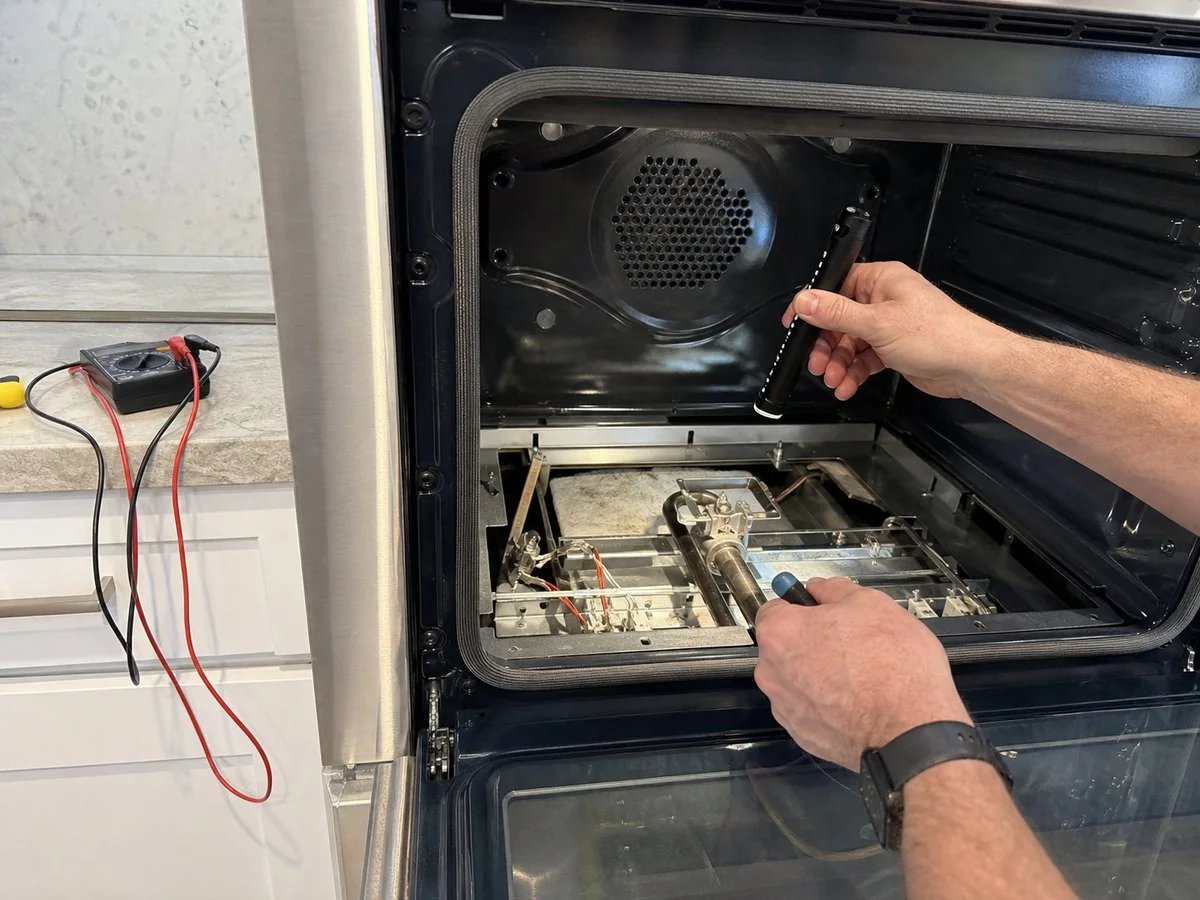
“Our IW-24 upper zone drifted to 61°F while the lower zone held 55°F before a dinner. The technician used independent probes, verified a thermistor out of range, and cleaned condenser airflow. The $485 repair stabilized both zones at 55°F the same evening.”
4.9/5 network rating372 verified repairs
Wine Storage · Napa Valley
Sub-Zero Wine Storage Temperature Drift in Napa
Why does my Sub-Zero wine cellar wander from its set point in Napa?
A wine column holding within 2°F usually drifts because a thermistor misreads the zone, a control board under-runs the cooling cycle, or a dust-loaded condenser raises head pressure. Napa Sub-Zero Repair reads each zone with a calibrated probe; for American Canyon collections in 94558, phone (628) 209-6820 before a drift ages the wine.
A Sub-Zero wine column drifting several degrees in a Napa home is not a vague "cooling problem" — it is a specific fault in the control board, thermistor or display alarm circuit that misreads or fails to hold one or both zones. We are an independent Sub-Zero specialist serving Napa, including estates along St. Helena Highway and wine-country properties where a collection represents years of careful cellaring. Because wine-storage stability demands a much tighter temperature band than a refrigerator, we read actual zone temperatures before quoting anything. Use Book Online — let us check whether repair makes sense before replacing.
Napa context: summer kitchen heat in valleys like Coombsville and American Canyon (94558) raises ambient temperatures significantly, loading wine-column condensers harder than the unit was tuned for — and accelerating drift that might otherwise be gradual.
Not a generic refrigerator problem
Why a wine cabinet is a different class of repair
A Sub-Zero wine column has engineering requirements that a regular refrigerator diagnosis misses. Getting them wrong means a "fixed" unit that still drifts.
The core issue is the temperature band. A fresh-food refrigerator can tolerate a 4–6°F swing without meaningful consequence. Wine storage for long-term aging needs to hold within 2°F of the set point — a band so tight that a thermistor reading 3°F low, or a control board running the compressor 10% less than commanded, produces a drifting cabinet with no obvious alarm and no apparent mechanical failure.
Sub-Zero wine columns are vapor-compression units, not thermoelectric. That is important because thermoelectric (Peltier) cooling — used in most countertop wine fridges — simply cannot hold tight tolerances in warm ambient conditions. A Sub-Zero wine column runs a proper sealed refrigeration system with a compressor, condenser, capillary tube and evaporator. It can hold temperature in a 90°F Napa summer kitchen. When it drifts, the cause is a component failure, not an inherent limitation of the cooling method.
Other wine-specific factors that change the diagnosis:
- Single vs dual zone: A dual-zone column has independent thermistors and sometimes independent fans for each zone. A single-zone unit that drifts is more likely a whole-cabinet control or sealed-system fault; an upper-zone-only drift on a dual-zone unit almost always points to that zone's thermistor or the board's zone circuit.
- UV glass and door seals: Wine column doors are often UV-filtered glass. A worn magnetic door seal on a glass door admits more infrared heat than a solid door gasket failure — the condensation pattern is different, and the zone that drifts is typically the one closest to the door's weak point.
- Vibration: Sub-Zero wine columns are designed to run quietly to avoid agitation. An abnormally noisy compressor or fan that vibrates the unit is itself a warning sign worth logging before we arrive.
- Humidity: Wine storage humidity matters for cork health. A door seal failure that admits warm air also admits low-humidity air — you may notice drier air or condensation on the front glass before you notice the temperature drift.
Sub-Zero wine column series in Napa
Common units we see in Napa kitchens:
IW-24— 24-inch integrated wine column, single zoneIW-30— 30-inch dual-zone, common in remodel projects424/427— classic wine storage, still in many Silverado estatesWS-30— standalone wine storage column, dual zone
Control board generations differ between series. The IW-series board is not interchangeable with the 400-series board even if the symptom looks identical. We confirm model and serial before ordering.
Napa summer load
In American Canyon and lower-valley neighborhoods (ZIP 94558), summer ambient temperatures regularly exceed 90°F in kitchens without dedicated AC. A wine column condenser working against 90°F ambient runs measurably harder than one in a 72°F kitchen. If the condenser coil has not been cleaned in 18 months or more, a Napa summer is when drift appears — and when it is most likely to be diagnosed as a "bigger" problem than it is. Condenser service alone sometimes resolves drift before any board or thermistor work is needed.
Scenarios — not generic benefits
Three situations we see in Napa wine-country kitchens
These are representative patterns — not promises of outcome. Every unit is different. Each scenario below shows the symptom, what diagnosis typically confirms, and what changes the quote.
Scenario A
Upper zone drifts; lower zone holds
Symptom: Dual-zone wine column, upper zone 6°F above set point; lower zone reads correctly. Display alarm may or may not have fired.
What diagnosis typically finds: Upper-zone thermistor reading low (telling the board it is colder than it is), causing the board to under-run the cooling cycle. Confirmed by reading thermistor resistance at temperature against spec.
Parts: Thermistor (zone-specific). Control board only if thermistor resistance is correct but board output is wrong.
What changes the quote: Whether it is thermistor only, or board plus thermistor. Dual-zone board replacement is a larger part than a single thermistor.
Scenario B
Both zones run 4–5°F warm in July
Symptom: Single- or dual-zone column, both zones drifting upward beginning in late spring or summer. Alarm may show a temperature excursion code.
What diagnosis typically finds: Condenser coil packed with dust and pet hair, raising head pressure. Compressor cycling off on thermal overload earlier than designed. Sometimes accompanied by a louder-than-normal run cycle.
Parts: Condenser cleaning service. If overload tripped repeatedly: overload protector inspection. Refrigerant charge check if condenser service alone does not restore temperature.
What changes the quote: Whether sealed-system work is needed after condenser service. We re-read temperatures after cleaning before quoting anything further.
Scenario C
Display shows correct temp; probe reads different
Symptom: Front display reads 55°F. Owner measures with a calibrated probe and gets 62°F. No alarm has fired. Collection at risk.
What diagnosis typically finds: Thermistor reporting incorrectly to the board, so the board is satisfied with a temperature the wine is not. The display alarm circuit is checking against the thermistor reading, not the actual zone air — so it never triggers. This is the silent drift scenario.
Parts: Thermistor replacement. Control board if the board's zone circuit has degraded and accepts out-of-range thermistor values without flagging.
What changes the quote: The board is a larger part; whether thermistor alone resolves it depends on what the meter shows, not what the display says.
The one limitation to name upfront
In all three scenarios above, the specific failed part cannot be confirmed from the symptom description alone — not from a remote message, not from the error code, and not from the display temperature. The diagnosis requires a technician on site with a calibrated probe and a meter. We give you the honest read after that, not before.
Plain-language component guide
Control board, thermistor and display alarm — what each one does and how it fails
The thermistor: the cabinet's temperature sense organ
A thermistor is a small resistor whose electrical resistance changes predictably with temperature. The control board reads that resistance continuously and adjusts the compressor and fan run cycles to hold the zone at set point. When a thermistor drifts out of calibration — typically from moisture ingress or age — it reports a temperature that differs from the actual zone air. The board acts on that false reading, so the cabinet may run too warm (thermistor reads low, board thinks it is already cold) or too cold (thermistor reads high, board overcools).
Diagnosis: measure thermistor resistance at a known temperature and compare to the manufacturer's resistance-temperature curve for that model. A thermistor within spec but producing wrong zone temperatures shifts the investigation to the control board's analog input circuit.
The control board: the decision-maker
The control board receives thermistor signals, interprets them, and drives the compressor relay, evaporator fan and (on dual-zone units) the zone-separation fan or damper. A board failure can take several forms: a relay that sticks open (compressor never runs, zone warms), a relay that sticks closed (compressor runs constantly, zone overcools or ices), or a degraded analog input that misinterprets a correct thermistor signal. Board failures often look like thermistor failures on the display — the symptom is the same, the part is not. That is why both have to be verified before either is ordered.
The display alarm: useful but not infallible
Sub-Zero wine columns trigger a display alarm when the zone temperature exceeds set point by a defined margin for a defined period. That alarm is generated by the same thermistor reading the board uses. If the thermistor is the problem, the alarm may never fire even when the actual zone air is far above set point — the board is satisfied because the thermistor says the zone is fine. This is the silent drift that produces Scenario C above. A display alarm confirms there is a temperature event; the absence of an alarm does not confirm the zone is holding correctly. See the error codes and alarms guide for code-specific detail.
Model note
IW-series wine columns (IW-24, IW-30) use a different thermistor connector and control board than the classic 400-series units (424, 427). On-site model and serial verification before the visit ensures the correct part rides on the truck. See the model and serial guide if you are not sure where to find the tag.
Common failures
Five wine-storage faults — symptom, diagnosis, and what moves the quote
| Fault | Symptom | Diagnosis confirms | Typical parts | What changes the quote |
|---|---|---|---|---|
| Thermistor failure | One zone drifts silently; display may show correct set point; probe reading differs from display by 4°F or more | Thermistor resistance out of spec at measured temperature; or resistance correct but zone still drifts — shifts to board | Zone thermistor (OEM, series-matched) | If board also needs replacement; dual-zone units have two thermistors — whether one or both are affected |
| Control board fault | Zone drifts warm or cold; compressor relay chatter audible; or unit runs continuously; alarm may or may not fire | Thermistor resistance correct but board output to compressor relay incorrect; or relay sticking open/closed under meter check | Control board (OEM; model-series-specific) | Board cost varies significantly by series; IW-series boards differ from 400-series; whether a second component was damaged by relay sticking |
| Condenser overload | Both zones drift warm in warm weather; compressor runs louder; unit runs almost continuously; may clear slightly in cool mornings | Condenser coil packed with debris; high head pressure; thermal overload cycling on hot afternoons; condenser fan speed low | Condenser cleaning service; condenser fan motor if weak; overload protector if repeatedly tripped | Whether sealed-system refrigerant work is needed after condenser service; condenser fan motor replacement adds cost |
| Door seal failure | Condensation on glass door interior; zone closest to door drifts warm; humid air smell when door is opened; cork dryness in bottles near door | Door seal no longer making full magnetic contact; warm air infiltration confirmed by smoke-pencil or tissue test; hinge drop measured | Magnetic door gasket (model-matched); door alignment adjustment; hinge adjustment or replacement | Whether hinge has dropped and requires part replacement vs adjustment; UV glass door panel seal vs standard gasket — UV-glass seals are more expensive |
| Evaporator fan failure | Zone runs warm; compressor appears to cycle but air does not circulate; a click or slow-start hum from inside the cabinet | Fan motor draws low or no current; or fan blades obstructed by frost; evaporator temperature drops but zone air temperature does not follow | Evaporator fan motor (OEM); defrost element check if frost obstruction caused the failure; fan blade if cracked | Whether frost accumulation caused the fan stall — if so, defrost system is also investigated; dual-zone units may have separate fans per zone |
Napa neighborhoods — service notes
How the neighborhood changes the wine-storage call
Access, ambient climate and home type each change how a wine-column repair runs. These are real service considerations, not a city name list.
Browns Valley
Ranch and farmhouse kitchens with integrated wine columns built into older cabinet runs. Condenser access often requires easing the unit forward — plan for extra time on the first visit. Older units in this neighborhood are frequently the 400-series models whose parts require confirming before the truck rolls.
Alta Heights
Hillside homes with afternoon sun loading west-facing kitchens. Wine columns here run against higher ambient temperatures from mid-afternoon onward — condenser load is the first thing we check. If the drift started in late spring and worsens by 3pm, that is the pattern.
Silverado & Coombsville
Estate and rural properties with dual-zone wine columns and sometimes secondary wine storage in a separate room. A drift of a few degrees here can threaten a real collection. Second-home properties in Coombsville may have been drifting unmonitored between visits — we confirm actual zone temperatures and log the reading before leaving.
American Canyon (94558)
Lower valley, warmer, and at the south end of our service district. Routing from Napa adds time, and summer temperatures in American Canyon kitchens can push 90–95°F ambient — near the upper limit of what even a clean condenser handles efficiently. We schedule American Canyon calls early in the day when possible and carry an extra condenser fan motor as a precaution.
Also serving downtown Napa, the Oxbow area, Yountville and St. Helena. Up-valley calls along St. Helena Highway are part of the regular routing — no extra trip fee for that corridor.
Before you book
When to schedule, when to pause the unit, and how to prepare
Schedule promptly if:
- Your probe reading differs from the display by more than 3°F and the drift has lasted more than 24 hours
- A display alarm code has fired and cleared — the code number matters even after it clears; note it
- The upper zone of a dual-zone column is drifting while the lower zone holds — this is typically a thermistor fault, one of the more affordable repairs to confirm
- You have valuable bottles nearing a drinking window — even a short drift can accelerate aging unpredictably
- The unit is running noticeably louder or more continuously than usual alongside the drift
Pause active use if:
- The zone is running 8°F or more above set point — move temperature-sensitive whites and opened bottles to another location
- You smell something electrical or notice visible condensation inside the cabinet on the back wall (not just the glass door)
- The fresh-food section of a combination refrigerator/wine unit is also warm while the freezer holds — that is a different fault requiring the not-cooling diagnostic guide
What helps when you schedule
These details help the technician verify the right part during the visit:
- Model and serial number — tag is usually inside the upper-left column wall or behind the bottom grille. Photograph it.
- Your set point (what the display shows) and your probe reading if you have one
- Any alarm code that appeared, even briefly — include the exact code string, not just "an alarm went off"
- When the drift started and whether it has been getting progressively worse or is stable
- Single or dual zone, and which zone is drifting if dual
Not sure of your model number? The model and serial guide shows the tag location for IW-series columns and the 400-series units.
Honest cost range
What wine storage repair costs in Napa
General Napa ranges only — every job is confirmed in a written flat quote before work begins. The diagnostic fee applies toward the repair you approve.
Diagnostic visit
$150–$225
Actual zone temperature readings, thermistor check, condenser inspection and a written quote. Credited toward the repair.
Common wine-column repairs
$340–$950
Thermistor, control board, evaporator fan, door seal, condenser service or fan motor. Parts are OEM and series-matched.
Sealed system
$1,200–$2,900+
Compressor or refrigerant work. EPA-regulated, confirmed with pressure readings before quoting, not assumed from the symptom.
Check whether repair makes sense before replacing
A replacement Sub-Zero wine column — IW-series built-in or a 400-series successor — runs $5,000–$11,000 or more, plus installation and cabinet work. Most wine-column faults are a thermistor, a board, a fan or a door seal. For those, repair is clearly the right answer. The sealed-system range is the only scenario where replacement deserves a serious look, and only if the unit is old and has other tired parts alongside it. See the repair vs replace framework for a scored decision guide.
Wine storage — questions & answers
Six questions Napa wine owners ask before approving service
Why is my Sub-Zero wine column drifting several degrees above the set point?
In most cases the cause is one of three things: a thermistor reading the zone temperature incorrectly and telling the control board the zone is colder than it actually is; a control board that has lost the ability to hold the compressor or fan on the right duty cycle; or a condenser overloaded with dust that raises head pressure and lets the cabinet run warm. A display alarm may or may not appear — drift can be silent for days before the display catches it. Diagnosis involves reading actual zone temperatures with a calibrated probe, checking the thermistor resistance, and reviewing board output before any part is ordered.
Is a wine cabinet harder to repair than a regular Sub-Zero refrigerator?
Not harder in terms of tools, but the stakes and the tolerance band are different. A wine column must hold a much tighter range — typically 55°F ± 2°F for long-term red storage — compared to a fresh-food compartment that can swing 4–6°F without real risk to food. That means the thermistor and control board calibration matter more, and a repair is only confirmed when actual zone readings hold steady, not when the front display shows the set point.
What does a Sub-Zero wine storage repair cost in Napa?
The diagnostic visit is $150–$225 and is credited toward the repair you approve. Most wine column repairs — thermistor, control board, fan, condenser service or door seal — land between $340 and $950 with parts. Sealed-system work such as a compressor or refrigerant issue runs $1,200–$2,900+ because it is EPA-regulated and labor-heavy. Every job is confirmed in a written flat quote before work begins.
Can I keep using my Sub-Zero wine column while it is drifting?
It depends on how much it is drifting and what you are storing. A drift of 2–3°F above your set point for a day or two rarely harms a well-rested collection, but continued or accelerating drift risks oxidation and premature aging — particularly for whites, which are more sensitive to temperature swings. If the column is running 8°F or more above set point, or if the upper zone of a dual-zone unit is warming while the lower holds, pause active service and request service promptly.
Does a Sub-Zero wine column use the same thermoelectric cooling as a countertop wine fridge?
No. Sub-Zero wine columns use a conventional vapor-compression refrigeration system — a compressor, condenser, evaporator and expansion device — not thermoelectric (Peltier) cooling. That means they can hold tighter temperatures in warm ambient conditions and are serviceable with OEM parts. It also means the diagnosis is different: we are looking at sealed-system pressures, evaporator fans, thermistors and a control board, not at a simple Peltier module.
What wine temperature swing should a Napa owner treat as urgent?
A short 2°F drift can be monitored if it recovers quickly, but a zone running 5°F or more above set point for a full afternoon deserves service. At 60°F or higher, especially during Silverado or harvest-season hosting, move sensitive bottles to a cooler interior space and request same-day diagnosis.
Ready to schedule service?
Call (628) 209-6820 or book online to schedule a diagnostic window. The technician verifies model, serial, temperatures and repair evidence at the appliance before the written quote.
Local reviews
Wine-storage reviews with zone temperature, bottle risk and repair proof
4.9/5 network rating372 verified repairs
“A 427R wine cabinet near a warm west wall climbed 5°F every afternoon. Service measured cabinet heat, checked the zone fan and replaced the weak fan motor. The $690 repair took 2.5 hours and held the red zone at 55°F through the next hot day.”
“The display showed 55°F but an independent probe read 59°F in our downtown condo. The tech confirmed sensor drift instead of changing the board first. The thermistor repair was $430, and the written record showed probe readings before and after calibration.”
Service desk: 1300 First Street, Suite 368, Napa, CA 94559. Visits are scheduled by appointment; call before stopping by.